Crime Cause
Loan Apps, Data Custody, and Digital Arrest Risk.
Crime Cause organizes documentary pointers around alleged loan-app abuse, permission harvesting, KYC extraction, cyber fraud infrastructure, digital arrest risk, and unresolved public questions about recovered citizen data.
The page is a research and evidence-reading surface. It does not make final findings of guilt. It points readers to records, source reports, and verification questions that can be checked against the linked public materials.
2016
Adtech Warning Layer
2017-2023
Loan-App Data Pipeline
2024-2026
Digital Arrest and AI Risk
Police Sources
Record Match Questions
DISHA
Evidence to Public Memory
The alleged crime pattern is difficult to understand because it crosses app stores, permissions, call centres, payments, KYC records, foreign-linked entities, police reports, enforcement references, and later impersonation risks. Crime Cause brings those scattered references into one readable public-interest page.
The central question is data custody. When enforcement action happens, were harvested contacts, images, KYC material, device identifiers, and related citizen records recovered, destroyed, audited, or notified to affected citizens? The page keeps that question visible without overstating what the public record can prove.
Method
How the alleged system is described.
Credit as Entry
The research materials describe small-credit products as an entry point for permissions, device data, contacts, images, KYC material, and behavioural pressure.
Profiles as Output
The mapped flow moves from app install to permission capture, upload, KYC merging, profile building, and alleged reuse through fraud or coercive recovery networks.
Names as Surface
The records suggest that front-end app names may change faster than infrastructure, SDKs, databases, operators, and collection habits.
Custody as Test
The public-interest test is whether citizen data was traced, preserved, recovered, destroyed, audited, or disclosed after action by authorities.
Verification Records
Source Records for This Page
These files are research pointers for readers who want to inspect the source trail. They support verification, citation, and correction; they are not presented as final adjudication.
China Cyber Year-by-Year Investigator Dossier
Chronology and research framing for cyber and data-risk patterns.
Research DossierChinese Loan App Legal Dossier
Documentary reading file for loan-app abuse and data-custody questions.
Record MapCrime Mapping Record
Mapped relationships between actors, records, systems, and open questions.
Architecture DiagramsCrime Architecture Diagrams
Visual architecture for the alleged data and fraud pipeline.
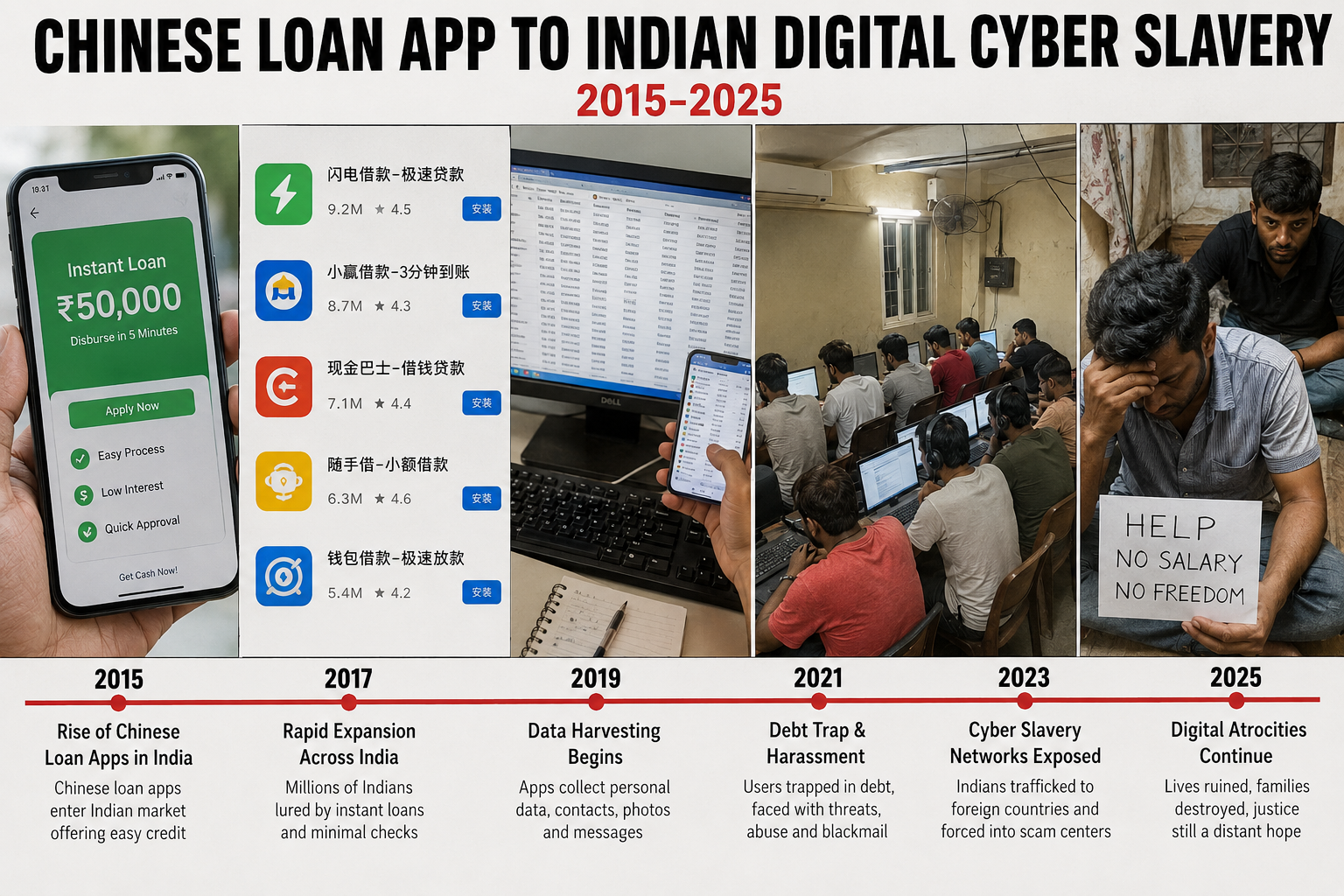
Chronology ImageChinese Loan App Cyber Slavery Timeline
Chronology image used as the visual source layer for this page.
Source MatchPolice Record Match Report
Police-source matching report and verification questions.
Open the linked PDF or image first, then check the document title, source signal, public authority reference, and file path. Treat strong wording as a research claim unless the linked source supplies documentary support.
Keep allegation, source record, public pointer, and adjudicated finding separate. This page is designed for inspection and correction, not for final legal conclusions.
Final Observation
The unresolved question is not only who ran the apps. It is what happened to citizen data.
Crime Cause exists to keep that question readable, traceable, and connected to records that can be opened, challenged, corrected, and cited.