Reader verification note: This article separates public records, cited identifiers, author analysis and unresolved questions. It should not be read as a court finding, government certification or final institutional determination unless the linked record says so.
Correction route: Readers can challenge factual errors through Editorial Standards and the archive's published contact route.
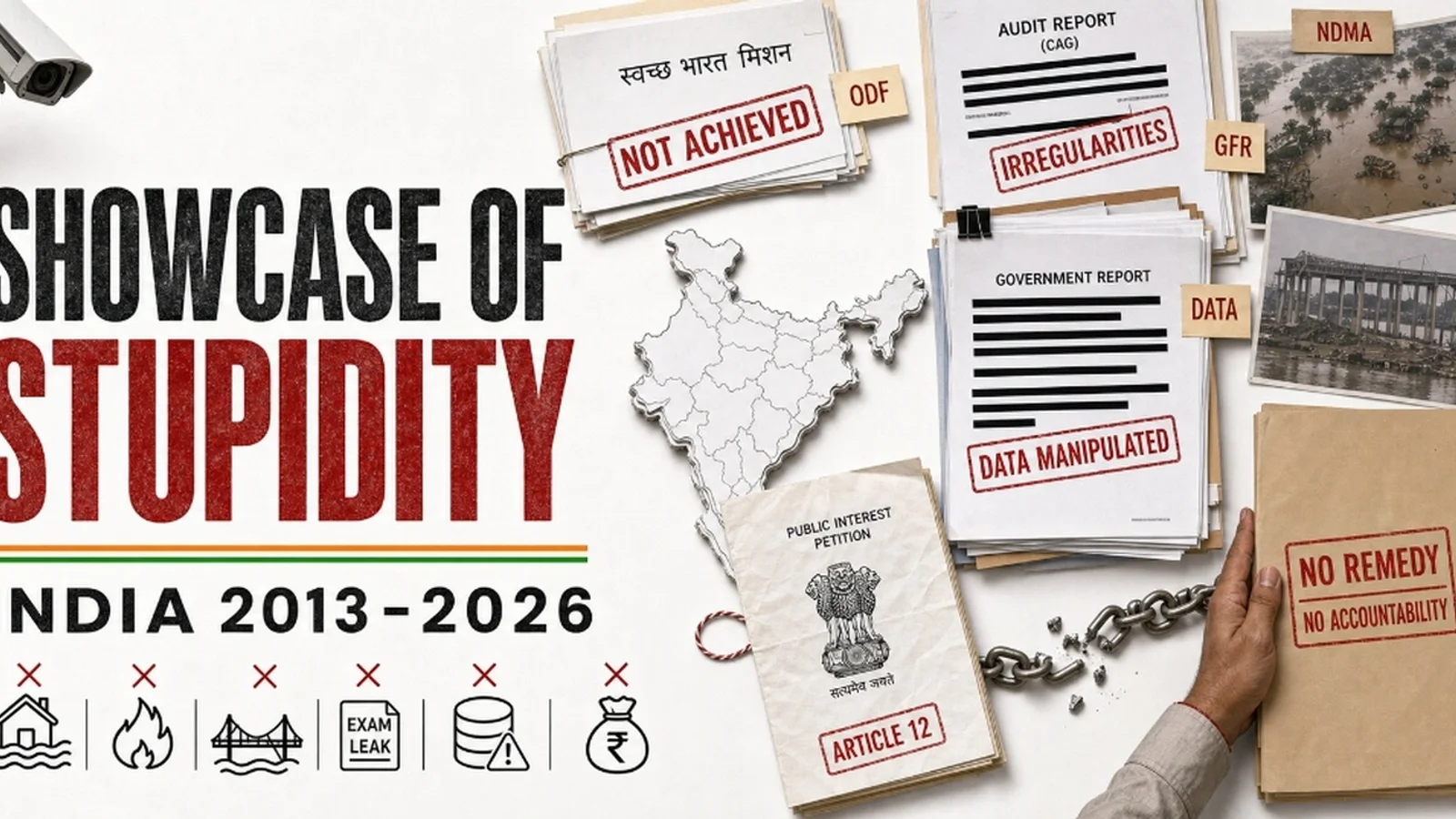
The contradiction is more administrative than rhetorical: a State can write detailed rules, build expansive systems, and track activity in real time, yet still fail to make the record work for the people who paid for it.
Twelve years of disaster codes, financial rules, digital identity, dashboards and population-scale databases have produced a government that can locate citizens for tax, identity, compliance and verification. The harder question is whether the same citizen can be located when relief, correction, review, compensation or accountability is required.
The money leaves the treasury. Then the trail weakens.
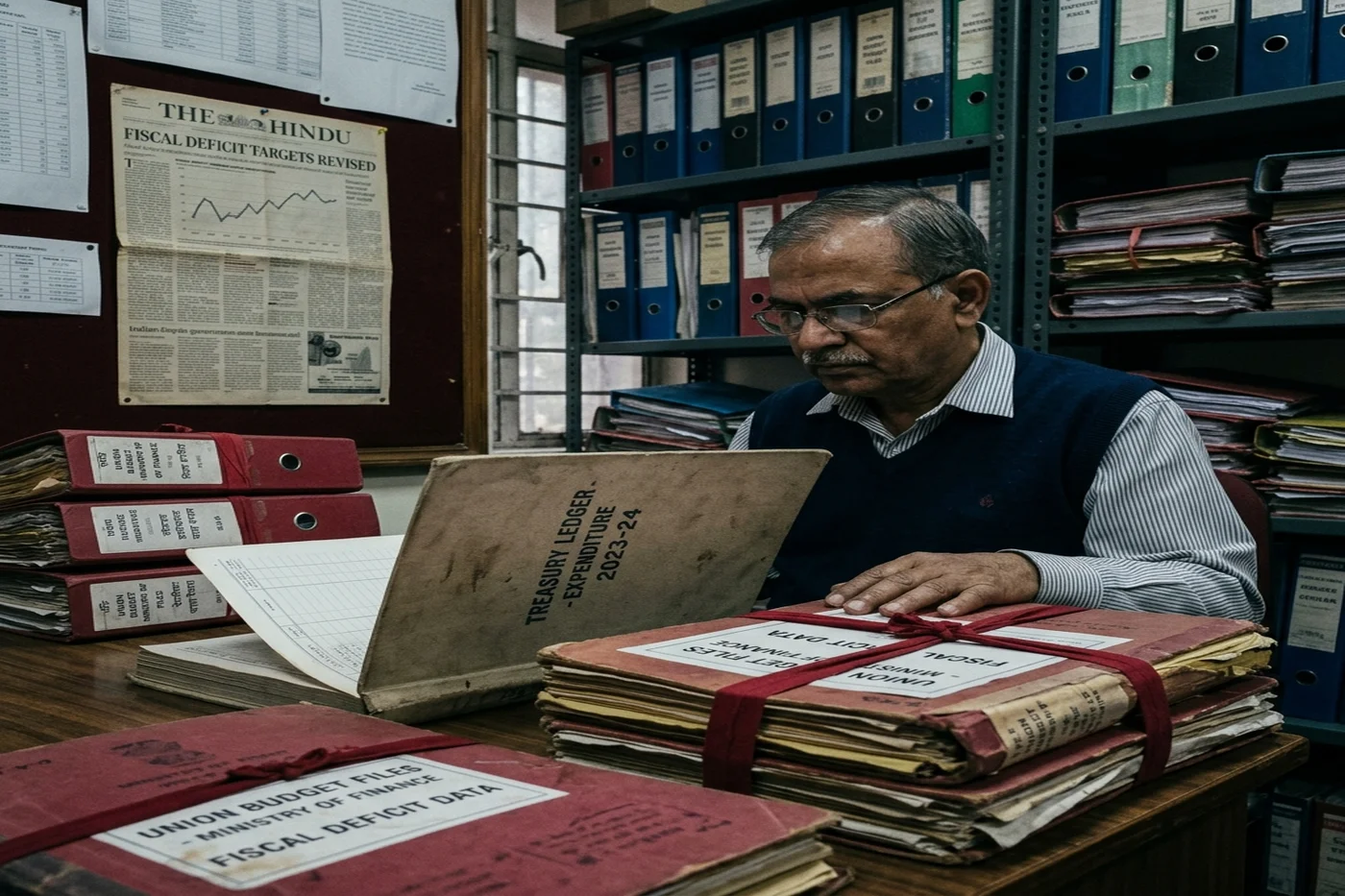
India's General Financial Rules, public procurement systems, PFMS, GeM and CAG audit architecture are not casual instruments. They are serious rules written for public money. Yet the implementation layer often turns lawful sanction into expenditure shown on paper, utilisation certificates filed late or incompletely, and outcomes that are difficult for citizens to verify.
Release of money is not utilisation. Utilisation is not outcome. Outcome is not accountability.
For the citizen, the important question is simple: if a scheme was funded, who can prove what reached the ground, who signed the record, who verified the work, and who answers when the result is missing?
Disaster governance exposes the same gap.
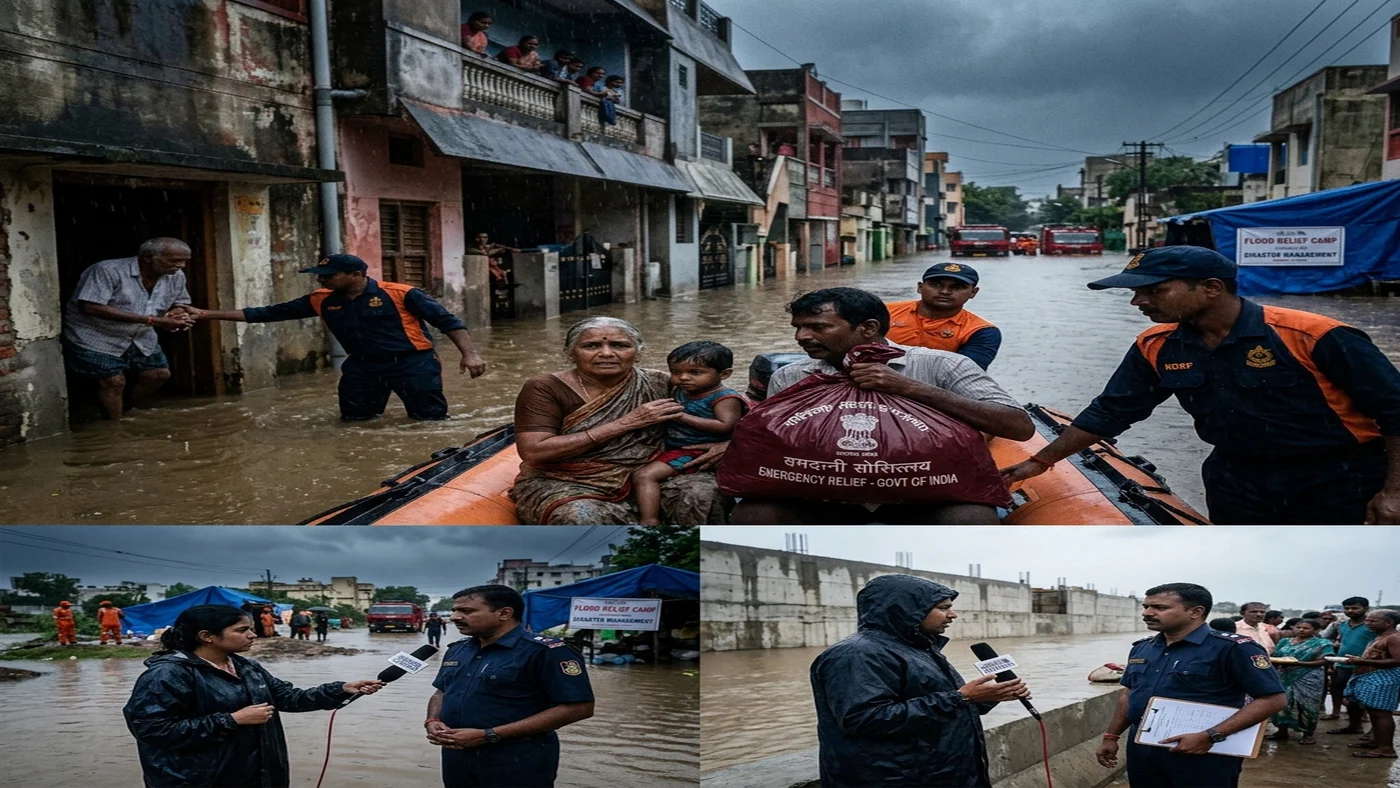
India has NDMA, SDMAs, district authorities, response funds, relief manuals and mitigation plans. Everything that should exist appears to exist. But when floods, drainage failures, unsafe construction or recurring vulnerability affect real people, the public record often struggles to connect institutional responsibility with individual remedy.
That is why disaster governance is not only a relief issue. It is an Article 12 question. If an authority exists in law, but responsibility cannot be located in practice, the citizen is left with a file instead of protection.
Digital India made the citizen visible. Remedy must now become visible.
Digital governance has made India administratively powerful. The State can authenticate, profile, verify, target, transfer, block, flag, score and record at scale. The constitutional test is whether the same systems allow correction, explanation, appeal, audit and human accountability at the same scale.
The citizen cannot be treated as a data point when the State wants compliance, and as an invisible person when the same citizen asks for a remedy. A digital republic cannot be judged only by how much it records. It must be judged by whether its records can protect the person inside them.
The Article 12 question.
The Constitution was not written to produce successful files. It was written to protect citizens.
This is the paper State's deepest contradiction. The State becomes more visible through portals, dashboards, certificates and announcements. The citizen becomes less visible through outcomes. After twelve years, the milestone worth measuring is not only how much was announced. It is how much could be verified, corrected and answered when the citizen asked.
Connected records
Article 12 research archive - Constitutional accountability library.
NDMA disaster governance case record - Sourced analysis on emergency response plans.
Digital Constitutional Personhood framework - Theory of citizen data rights.
DISHA Intelligence Archive - Case files and primary source documents.