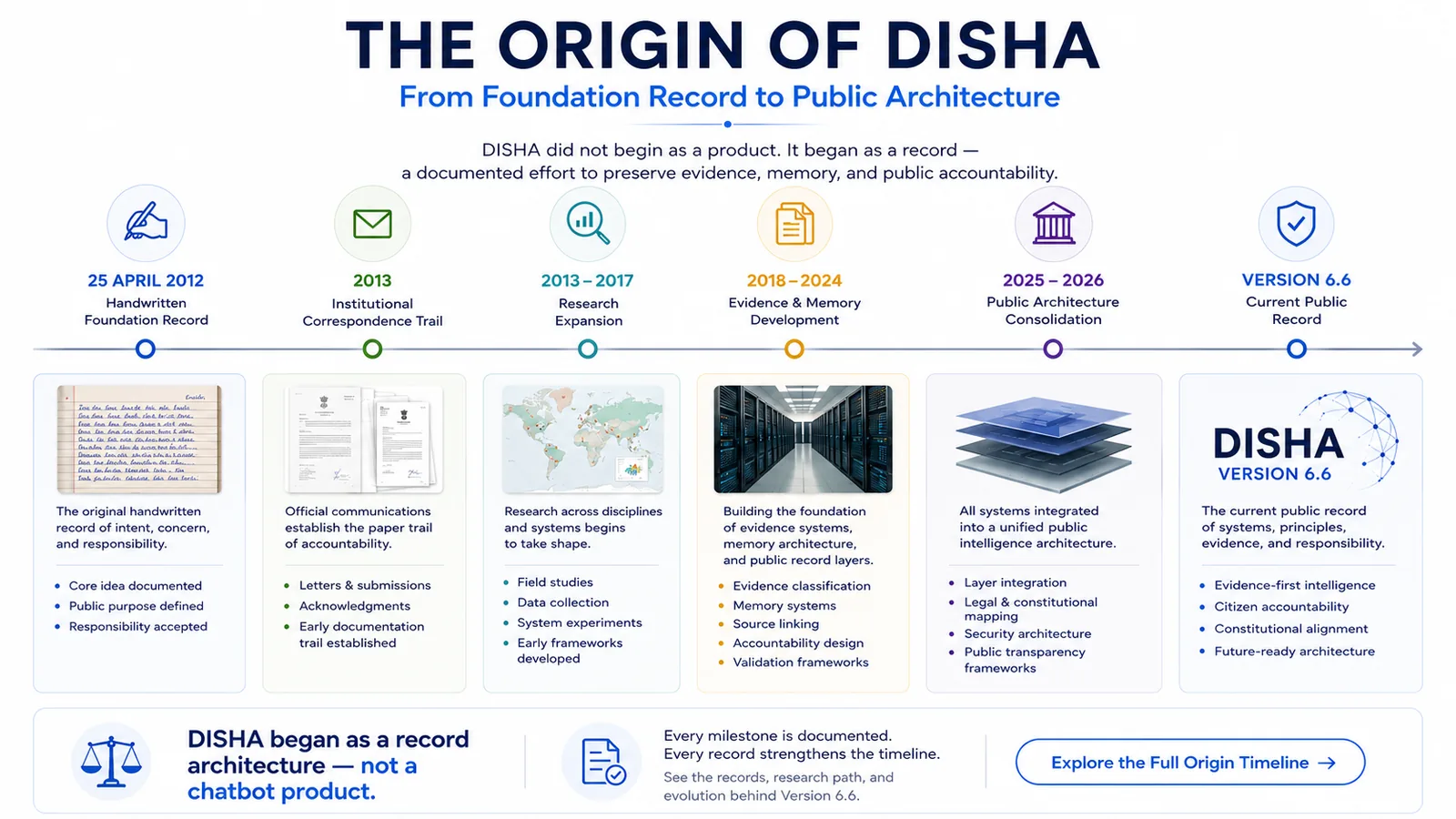
When did DISHA begin?
The earliest foundation record is dated 25 April 2012.
DISHA public architecture
From foundation record to public architecture.

Direct Answer
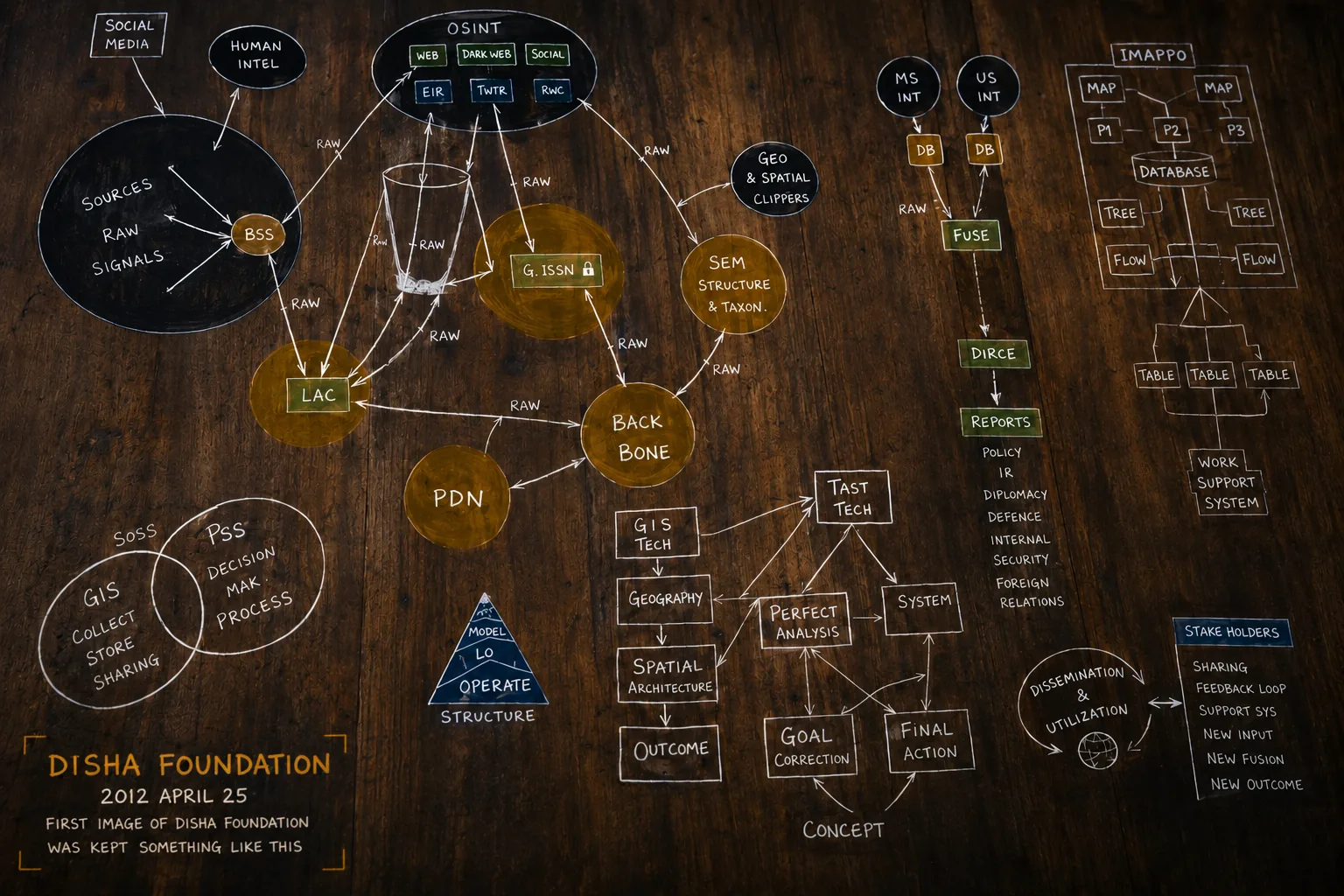
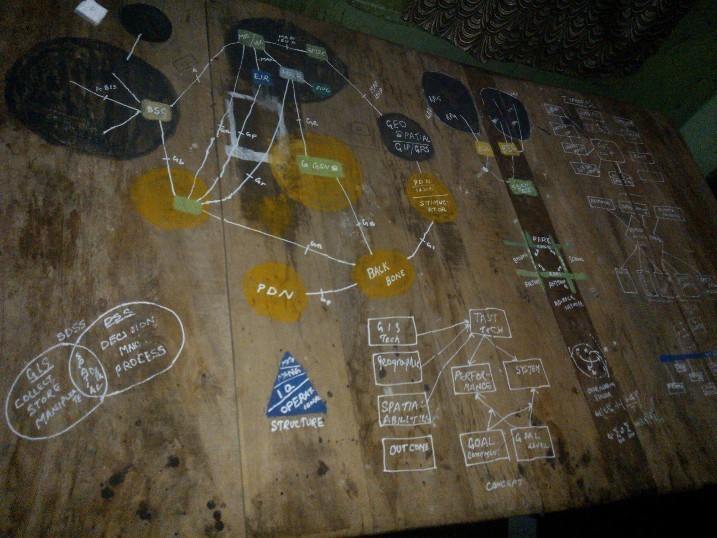
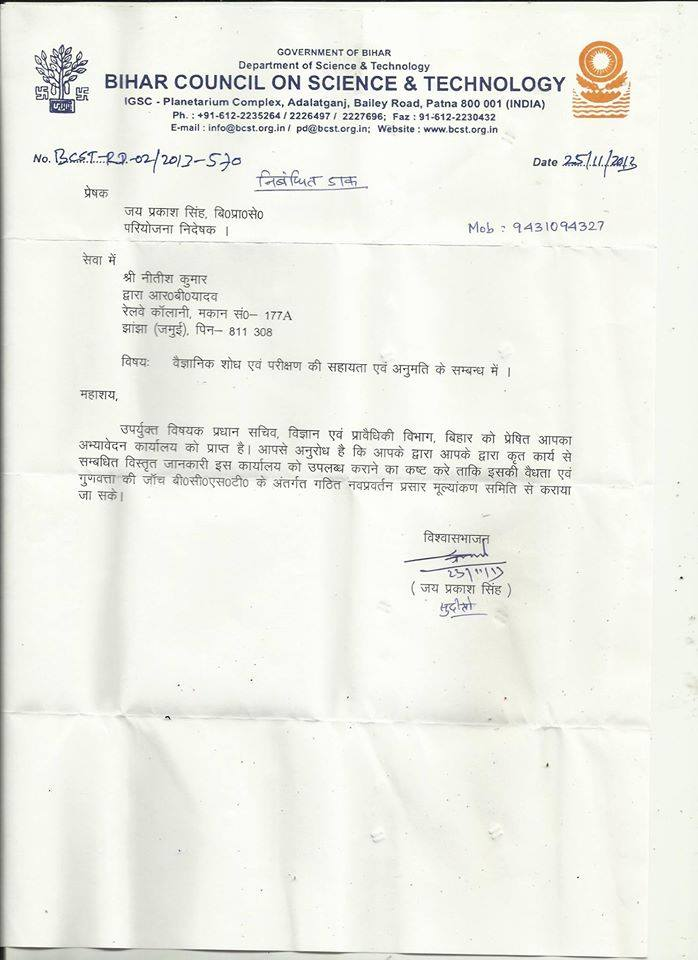
The DISHA origin record is based on two early source points: a foundation sketch dated 25 April 2012 and a 2013 Bihar Council of Science and Technology correspondence record. These records support chronology and research context. They do not, by themselves, prove every present capability, deployment or validation claim.
Page Facts
How this works in DISHA v6.6 runtime
DISHA does not turn every input into truth. It turns every input into a record that can be examined.
The current runtime uses a typed mission signal. A signal can include raw text, evidence files, geospatial points, threat indicators, requested action, data-source references, sensitivity, user role, device trust, action risk and telemetry risk.
DISHA did not begin as a chatbot product. It began as a record. The first visible form was handwritten, with the problem already present: how should signals be organised, how should evidence survive, how should intelligence remain accountable, and who should receive the result?
25 April 2012 marks the foundation record. The 2013 correspondence adds an external institutional trail connected to research context. Later years show expansion into evidence, memory, public architecture and Version 6.6 documentation.
Origin proves chronology, continuity of the research question and movement from private conception to public documentation. It helps readers see where the architecture began.
Origin does not prove government adoption, full operational deployment, judicial approval or every later capability. Those claims would require separate source records.
Origin exhibits
The timeline above is supported by visible source exhibits. These records are shown as chronology and research context. They are not presented as proof of government adoption or as proof of every later Version 6.6 capability.
Research note
The Origin of DISHA is part of the DISHA public architecture record authored by Nitish Kumar (@thenitishkr). It is written for scrutiny and source-aware reading, not blind acceptance.
Nitish Kumar (@thenitishkr). "The Origin of DISHA." thenitishkr.in, 2026-06-29. https://thenitishkr.in/disha/origin/
Continue through DISHA
FAQ
The earliest foundation record is dated 25 April 2012.
It establishes an institutional correspondence trail connected to the early research chronology.
No. It supports chronology and research context, not adoption.
Because it shows where the evidence, memory and accountability question began.
Next step
Read how the method developed.